


Registration
Registration for courses will begin in June. All students, including first year students, must register themselves in classes and labs. To learn how to register for classes and get answers to FAQs, click here.
Student Advising
Need advising for your Biology courses and program? Please contact one of the following Biology Advisors. The best way to contact us is to ask a question in Self Service (use the Notes tab), or you can also contact us directly through email. We are also available to meet in person or on Teams at the times indicated below, or, by appointment.
Glenys Gibson (Head, Biology) glenys.gibson@acadiu.ca (Available for in person meetings Mondays from 3-5).
Lisa Taul (Administrative Assistant, Biology), lisa.taul@acadiau.ca (Often available; please contact Lisa to make an appointment).
Allison Walker, allison.walker@acadiau.ca. (Available for in person meetings Wednesdays from 1-3).
Matt Hazel, matthew.hazel@acadiau.ca. (Available for in person meetings Tuesdays from 1-3).
First Year Biology
| Fall Semester | Winter Semester | |
| BIOL1113 and BIOL1110L (Lab) Organisms and Their Environment 1 + Lab |
BIOL1123 and BIOL1120L (Lab) Organisms and Their Environment 2 + Lab |
|
| CHEM1013 and CHEM1010L (Lab) Fundamental Chemistry 1 + Lab |
CHEM1023 and CHEM1020L (Lab) Fundamental Chemistry 2 + Lab |
|
| *MATH1253 and MATH1250L (Studio) Statistics 1 |
Elective xxx3 Your choice |
|
| Elective xxx3 Your choice |
Elective xxx3 Your choice |
|
| Elective xxx3 Your choice |
Elective xxx3 Your choice |
*If you need to take MATH 1013 and 1010L (Calculus 1 + Lab) for future programs, you can register for both Statistics 1 and Calculus in the same semester, or you can take MATH 1253 + 1250L in the Winter semester.
Second Year Biology
All biology majors must take BIOL 2013 and 2010L (Cell & Molecular biology + Lab) plus any two of:
- BIOL 2043 and 2040L (Biodiversity of Plants and Algae + Lab)
- BIOL 2053 and 2050L (Microbial Diversity + Lab)
- BIOL 2073 and 2070L (Animal Diversity + Lab)
Important: For 2nd year and upper-level biology majors who have not yet taken the Statistics requirement, and do not already have MATH2233, the following 2 courses are required for your program:
MATH 1253 and 1250L and MATH 2243 and 2040L (Statistics I and Statistics II for Life Sciences + Labs)
Note: MATH1253 replaces MATH2233 as of 2022; if you already have MATH2233, you require MATH2243 and MATH 2040L to complete the course requirements.
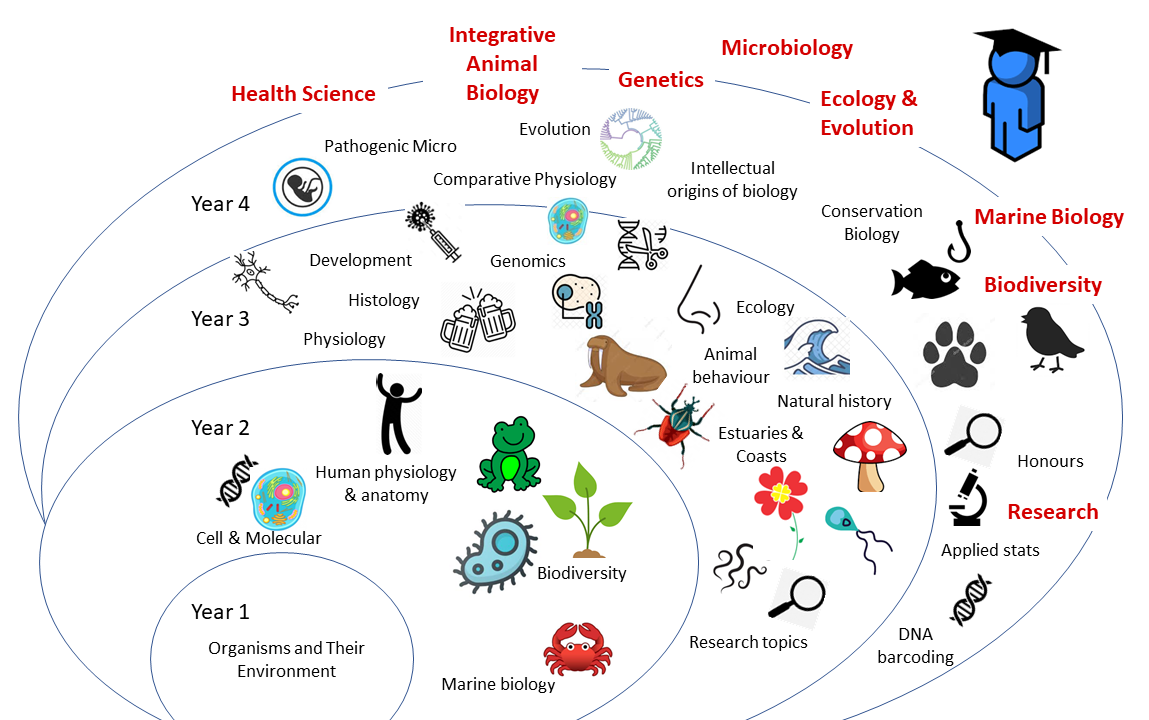
Program Themes
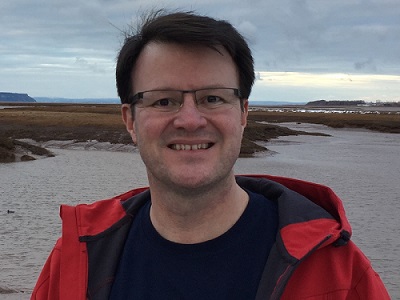
Dr. Juan Carlos López
2021 recipient of the Acadia Alumni Faculty Award for Excellence in Teaching
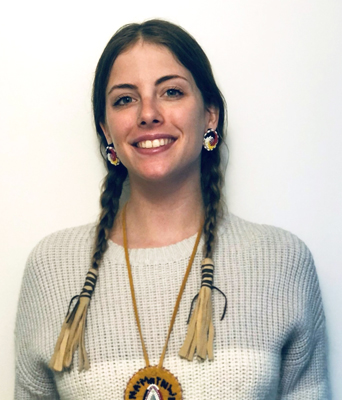
Leah Creaser
Awarded 3M National Student Fellowship
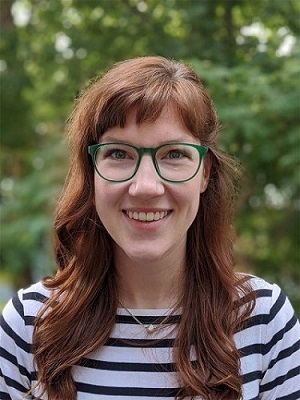
Julia Whidden ('13, '15)
Alumna’s Terranaut Club pivots during pandemic, continues to introduce young women to STEM
Biology At-A-Glance
The Department of Biology building houses offices, teaching laboratories, and research laboratories for faculty members, graduate and Honours students, and staff. There are 5 state-of-the-art teaching labs with specialized equipment where most of your biology labs will take place (some labs are in the field). Generous office space is available for graduate students, and shared office space for Honours students allowing for an engaging, connected research experience.
Acadia offers a Bachelor of Science (B.Sc.) degree with a biology major, a B.Sc. with Honours in biology, a B.Sc. with a double major (biology plus chemistry, physics, psychology, etc.), and a Master of Science (M.Sc.) in Biology. Each degree has specific course requirements, and all have liberal hands-on instruction with small class sizes (10-90 students in most cases), and labs limited at 24 students.
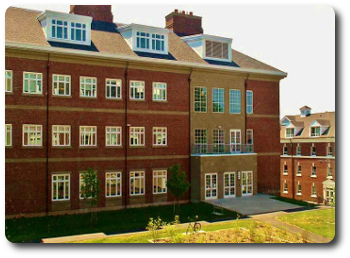
Acadia is fortunate in its geographical location. The local diversity of habitats provides a strong basis for field-oriented course work, enabling the department to offer a good balance of outdoor and indoor laboratory experiences even in winter! Whole organism dissection is prevalent in many labs further enhanced by preserved specimens available from the E.C. Smith Herbarium (over 200,000 specimens including vascular plants, bryophytes, and fungi) and the Wildlife Museum (140,000 specimens with 4,500 mammals & birds and several hundred fish).
The department is fortunate to own property on Brier Island (Digby County) and Hemeon Head (Lunenburg County), and to operate the Richardson Field Station in Biology on Bon Portage Island (Shelburne County). The Richardson Field Station provides accommodations and laboratory facilities for both course work and research.